


In the aftermath of an accident, expecting the defendant to simply hand over compensation is unrealistic. You will have to prove your case in order to get the compensation you are owed. The burden of proof is the legal standard you must meet in order to have a successful claim. There are different burdens of proof, depending on the type of case you have and the law that governs your claim.
In personal injury claims, the plaintiff (or injury victim) has the burden of proof. This means that the plaintiff must present enough evidence to overcome the burden and win their case. Keep reading below to learn all the details about the burden of proof and how it can affect your personal injury claim.
Understanding the Different Burdens of Proof
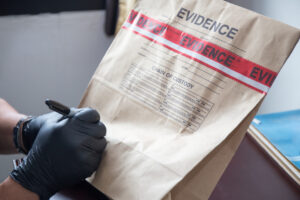
The burden of proof differs depending on the type of case you are involved in. State law sets the burden that must be met. The most common burdens of proof in Florida are:
Preponderance of the Evidence
Most civil cases must be proven by a preponderance of the evidence. This is the lowest burden of proof that exists. This is the burden you must meet to win most personal injury claims in Florida. Proving your case by a preponderance of the evidence means that your version of the facts is more likely true than not.
Think of a set of scales. Imagine putting your evidence on one side of the scale while the defense puts their evidence on the other. You must have just enough evidence to tip the scales in your favor, or just over 50% of the evidence supporting your claim.
Clear and Convincing Evidence
Clear and convincing evidence is a higher burden of proof. Under this standard, your version of the facts must be highly and substantially more likely to be true than not.
Clear and convincing evidence is a common standard used to award punitive damages. A plaintiff must often meet this standard when proving a defendant’s outrageous behavior.
Beyond a Reasonable Doubt
Beyond a reasonable doubt is the highest burden of proof. This is the standard used in most criminal cases. Under this standard, there is no other reasonable explanation for what happened besides the alleged version of the facts. However, this does not mean that 100% of the evidence must be in one party’s favor.
Keep in mind that the standard is beyond a “reasonable” doubt. The standard is not beyond “any” doubt. In criminal cases, the prosecution has the burden of proving its case beyond a reasonable doubt. To help see the differences in these standards, think about a situation that may involve both criminal charges and civil liability.
For example, you might win a civil wrongful death action because you have more than 50% of the evidence on your side. However, the state might not convict the defendant of murder because it cannot prove its case beyond a reasonable doubt. Even 1% of doubt—if it is reasonable—could mean a not guilty verdict.
What Evidence Can Be Used to Prove Your Claim?
The specific evidence that will be allowed at your trial is determined by the Florida Rules of Evidence. Generally, the more evidence you have on your side, the better your chances of success. You may typically use any relevant evidence that is not deemed inadmissible.
Evidence used in personal injury claims typically includes:
- Medical records
- Photos
- Video surveillance
- Your own testimony
- Witness testimony
- Testimony from the defendant
- Expert witnesses
- Bills and receipts
You will need evidence that is sufficient to meet the burden of proof of the defendant’s liability and of the value of your damages. Understanding what evidence may be necessary can help you determine whether you could build a comprehensive case that meets the burden of proof.
Proving Negligence in a Personal Injury Case
To recover compensation for your injuries, most personal injury lawsuits require proof of the defendant’s negligence by a preponderance of the evidence.
Proving negligence generally requires showing:
- Duty of care: A legal obligation to uphold a reasonable standard of conduct under the circumstances.
- Breach of duty: Failure to uphold the accepted standard of care by action or inaction.
- Causation: A direct link between the defendant’s conduct and your injuries. But for the defendant’s conduct, you would not have suffered your injuries.
- Damages: Actual damages resulting from your injuries, such as medical bills, lost wages, or pain and suffering.
Your attorney must be able to prove all four elements, or else your case will likely not succeed in court and may be dismissed.
Contact Graves Thomas Injury Law Group for a Free Consultation With Our Vero Beach Personal Injury Attorneys Today
If you have been hurt in an accident, you only get one shot to prove your case and recover compensation for your injuries. Let the experienced team at Graves Thomas Injury Law Group help you prove your claim and get the compensation you deserve.
Understanding the different burdens of proof required to prove your case can be crucial to having enough evidence on your side. Contact us today at (772) 758-5735 to schedule your free consultation with a Vero Beach personal injury lawyer who is ready to help.
